

Choosing between TRC20 and ERC20 for a USDT casino payment is primarily a network-compatibility decision, not a contest over which blockchain is universally cheaper.
If a casino cashier displays USDT (TRC20), the payment must be sent through the TRON network. If it displays USDT (ERC20), it must be sent through Ethereum. Tether supports USD₮ on both networks, but the two routes use different blockchain infrastructure, addresses and fee systems. Tether's official supported-protocol documentation lists separate Ethereum and TRON deployments.
The cost comparison has also changed. Older guides frequently say TRC20 costs around $1 while an ERC20 transfer costs several dollars or more. That is no longer a safe assumption. Ethereum mainnet fees were exceptionally low when this article was researched in August 2026, while a TRC20 USDT transfer without enough TRON Energy could require several TRX. Always compare the current transfer quote rather than choosing a network from an old fee table.
U.S. reader note: being technically able to deposit cryptocurrency does not establish that an online casino is authorized where you live. U.S. online-casino regulation varies by state, so verify the operator and your state's rules independently before depositing. Our crypto casino licensing guide explains the checks in more detail.
TRC20 vs ERC20 USDT Casino Payments at a Glance
| Feature | USDT TRC20 | USDT ERC20 |
| Blockchain | TRON | Ethereum |
| Token standard | TRC20 | ERC20 |
| Common address display | Starts with T | Starts with 0x |
| Native fee system | Bandwidth + Energy; TRX can be burned when resources are insufficient | Ethereum gas paid in ETH |
| Block interval | About 3 seconds | 12-second slots |
| Full protocol finality | TRON solidification typically around one minute | Ethereum finality currently around 13-15 minutes |
| Casino credit time | Determined by casino/payment processor confirmation policy | Determined by casino/payment processor confirmation policy |
| Fixed fee? | No | No |
| Always cheaper? | No | No |
| Main casino-payment rule | Send only when cashier explicitly supports TRC20 | Send only when cashier explicitly supports ERC20 |
TRON's developer documentation describes three-second blocks, TRX-backed Bandwidth/Energy resources and T-formatted Base58Check addresses. Ethereum uses 12-second slots and requires ETH-denominated gas for transactions. Full consensus finality takes longer on both chains than simply seeing a transaction included in a block.
What Are USDT TRC20 and USDT ERC20?
USDT is Tether's dollar-denominated token, but Tether issues it through multiple blockchain protocols. The company explicitly lists both ERC20 via Ethereum and TRC20 via TRON, with separate official contract addresses for each deployment.
ERC20 is Ethereum's standard interface for fungible tokens. It defines functions such as transferring tokens and checking balances so wallets, exchanges and other applications can interact consistently with compatible tokens.
TRC20 performs a similar role on TRON. TRON's documentation describes TRC20 as its fungible-token standard and notes that its interface is largely compatible with ERC20, but TRC20 transactions still execute on TRON rather than Ethereum.
For a casino user, that technical distinction has a simple consequence:
USDT is not enough information. You also need the network.
A cashier that says only “USDT accepted” without identifying the supported blockchain leaves out information that is essential to making a safe transfer.
The Most Important Rule: Match the Casino Cashier Exactly
Do not select TRC20 because you remember reading that it is cheaper. Do not select ERC20 simply because your USDT originally came from an Ethereum exchange account.
Instead, start with the receiving side.
If the casino says:
USDT — TRC20
your sending wallet or exchange must use TRON/TRC20.
If the casino says:
USDT — ERC20
your sending side must use Ethereum/ERC20.
If the casino supports both, then—and only then—does fee comparison become relevant.
This same network-matching principle is used by major custodial platforms. Coinbase warns users to make sure the sender and recipient use the same supported network, while Kraken warns that deposits made through unsupported networks can remain uncredited or be difficult to recover.
USDT Casino Fees: There Are Three Different Costs
One of the biggest weaknesses in generic TRC20-vs-ERC20 comparisons is treating “the fee” as if there were only one.
A casino payment can involve at least three separate costs.
1. Blockchain Network Cost
This is the cost of getting the transaction onto the blockchain.
On Ethereum, transactions consume gas and the fee is paid in ETH. Ethereum explicitly states that gas fees are not fixed and change with network conditions.
On TRON, transactions consume Bandwidth, while TRC20 contract execution also consumes Energy. Staked or delegated resources can cover these requirements; otherwise TRX is burned according to the network's current resource parameters.
2. Wallet or Exchange Withdrawal Fee
If you send USDT from a centralized exchange, you may never see the blockchain gas calculation directly.
The exchange can quote its own withdrawal fee in USDT or another denomination and handle ETH, TRX or other native-resource requirements behind the scenes.
That means an exchange's TRC20 withdrawal fee can be higher or lower than the raw cost a self-custody wallet would encounter. The same applies to ERC20.
For a casino deposit made from an exchange, the number on the exchange's final withdrawal-confirmation screen matters more to you than a generic article's “typical fee.”
3. Casino Withdrawal or Processing Fee
When the direction is reversed and the casino sends USDT to you, the operator may apply its own payment policy.
A casino might:
● Absorb the network fee.
● Pass the network cost to the player.
● Charge a fixed withdrawal fee.
● Build the cost into the withdrawal amount.
● Offer different minimum withdrawal amounts by network.
The casino's quoted withdrawal fee therefore should not automatically be described as the TRON or Ethereum network fee.
Is TRC20 Cheaper Than ERC20 in 2026?
Not necessarily.
This is where current data differs most sharply from many ranking articles.
At the time of final review on August 11, 2026, Etherscan's gas tracker was showing standard Ethereum gas below 0.2 gwei and a standard ERC20 transfer in roughly the $0.01-$0.02 range. Ethereum's own 2026 documentation has also highlighted that mainnet transaction costs have fallen considerably, giving an illustrative ERC20 transfer cost of about $0.076 at 0.5 gwei. Both are snapshots rather than guarantees.
TRON works differently. Its current documentation gives a network parameter of 100 sun per Energy when Energy must be paid for by burning TRX. TRON also documents USDT transfer examples consuming roughly 64,000 Energy when the receiving address already holds USDT and around 130,000 Energy when it does not, although the exact figure can change because of contract state and TRON's Dynamic Energy Model.
At those parameters, 64,000–130,000 Energy corresponds to roughly 6.4–13 TRX before any additional Bandwidth cost. With TRX trading around $0.3155 at the research snapshot, that is approximately $2.02–$4.10 when the sender has no Energy resources available. A sender with staked or delegated Energy can reduce the TRX burn substantially.
What the Current Numbers Actually Mean
They do not mean that ERC20 will now always be cheaper.
They mean the opposite of the old shortcut:
Neither network should be declared universally cheaper.
Ethereum gas moves with network demand and ETH pricing. TRON's cost depends heavily on Energy availability, recipient state and current chain parameters. Exchanges and casinos may then apply their own fee schedules on top of—or instead of—the raw blockchain cost.
For a real casino payment, compare the live amount shown by the wallet, exchange or casino immediately before confirming the transaction.
Why Do So Many Guides Still Say TRC20 Is Cheaper?
Historically, Ethereum developed a reputation for expensive mainnet transactions, while TRON became widely used for stablecoin transfers because its resource model could provide inexpensive transfers, particularly for accounts with sufficient resources.
That history still appears throughout current search results. Several 2026 casino and crypto-payment pages continue to characterize TRC20 as the low-cost option and ERC20 as the expensive one.
But Ethereum's fee environment has changed materially. Ethereum.org now specifically warns that treating mainnet as inherently expensive is a stale assumption following recent scaling changes.
This is why a publication date matters whenever a page compares cryptocurrency transaction costs.
Is TRC20 Faster Than ERC20 for Casino Deposits?
TRON has a faster raw block cadence.
The TRON network produces a block approximately every three seconds. Ethereum operates in 12-second slots, with a validator given an opportunity to propose a block in each slot.
But “three seconds vs 12 seconds” is not the same as saying your casino balance will appear in three or 12 seconds.
A casino or crypto payment processor can require multiple confirmations or perform additional deposit-crediting checks before making funds available.
Full protocol finality is different again. TRON describes a block becoming solidified after enough Super Representatives build on it, typically around one minute. Ethereum currently reaches full consensus finality in roughly 13-15 minutes, although users and applications can obtain useful confirmation confidence well before full protocol finalization.
For casino users, the practical equation is:
deposit time = blockchain inclusion + required confirmations + casino crediting
That is why a fast chain does not guarantee an instant casino deposit.
How to Deposit USDT at a Casino Safely
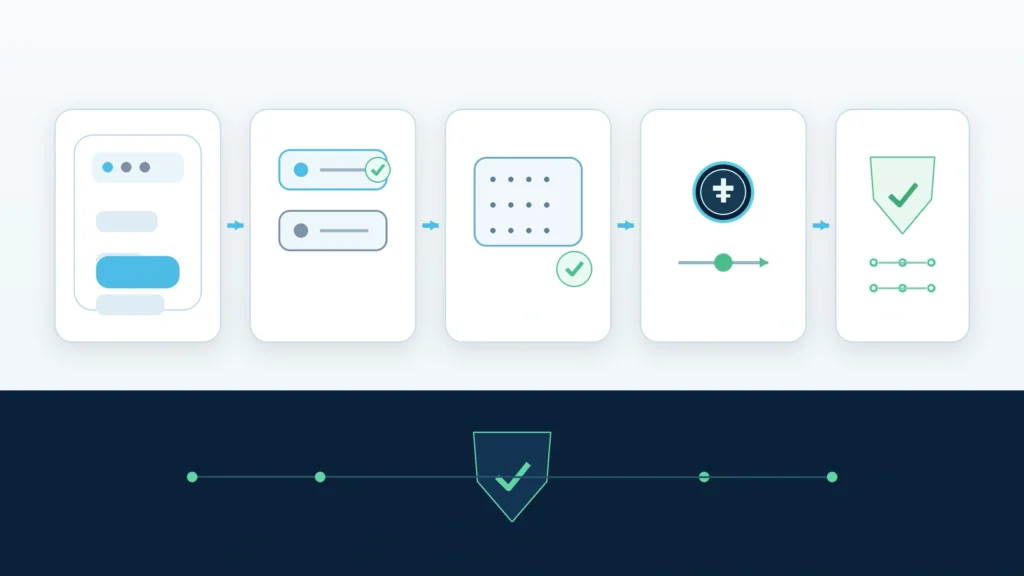
Step 1: Open the Official Casino Cashier
Generate the deposit instructions from inside your logged-in casino account.
Do not use a wallet address copied from a social-media message, Telegram contact, search advertisement or unsolicited “support agent.”
Step 2: Select USDT
Do not stop when the screen says Tether or USDT.
Look for the network selector.
The cashier may show:
● TRC20.
● ERC20.
● BNB Smart Chain.
● Solana.
● Polygon.
● Another supported USDT network.
Tether itself supports USDT across multiple blockchain protocols, which is exactly why the chain selection matters.
Step 3: Match the Network at the Sending Wallet or Exchange
If the cashier generates a TRC20 address, choose TRON/TRC20 when withdrawing.
If it generates an ERC20 address, choose Ethereum/ERC20.
Never choose another network simply because the fee is lower.
Step 4: Verify the Address
TRON's ordinary Base58Check addresses normally begin with T, while Ethereum addresses are represented using the 0x hexadecimal format.
Check several characters at both the beginning and end of the destination rather than relying only on visual familiarity.
Step 5: Check the Minimum Deposit
A blockchain transaction can complete successfully while a casino refuses to credit it automatically if the amount is below its minimum deposit.
Network success and casino-account crediting are separate events.
Step 6: Consider a Small Test Transfer
For a substantial first-time deposit, a small supported test transaction can confirm that the network, address and casino-crediting process work as expected before the larger balance is sent.
Make sure the test itself is above any published minimum-deposit amount.
Step 7: Save the TXID
After broadcast, keep the transaction hash or TXID.
If the balance does not appear, the TXID lets you determine whether the transaction exists on the blockchain and whether it reached the destination address.
Our guide to crypto casino withdrawals and blockchain delays explains how the presence or absence of a TXID can separate an internal casino-payment delay from an on-chain problem.
How USDT Casino Withdrawals Differ From Deposits
A deposit is normally initiated by you. A casino withdrawal is initiated by the operator after it approves the request.
That distinction matters.
If you withdraw USDT through ERC20, you normally do not need to keep ETH in your receiving wallet simply to receive the transfer. Likewise, receiving TRC20 USDT does not ordinarily require you to fund the receiving wallet with TRX first.
Native gas becomes relevant when you later want to send those self-custodied tokens onward.
An ordinary ERC20 transaction uses ETH for gas. A TRC20 USDT transfer consumes TRON Bandwidth and Energy, with TRX available as the fallback payment when resources are insufficient.
Before requesting a casino withdrawal, confirm:
● Which USDT networks are available for cashouts.
● The minimum withdrawal.
● Any operator fee.
● Whether the receiving wallet supports that exact network.
● Whether KYC or payment review is required.
● The casino's processing time before blockchain broadcast.
A supposedly fast blockchain cannot eliminate an operator's internal withdrawal review. The site's guide to no-KYC and conditional verification explains why some accounts can still face verification during the cashout stage.
What Happens If You Send USDT on the Wrong Chain?
There is no single outcome called “wrong-chain loss.”
What happens depends on the networks, destination address and—most importantly—who controls the destination's private keys.
Scenario 1: You Select TRC20 for an ERC20 Casino Deposit
TRON and Ethereum display addresses differently: TRON commonly uses a T address, while Ethereum uses 0x. That obvious format difference allows many interfaces to detect an invalid destination before broadcast.
Do not depend on software to save you, however.
If a transaction is somehow executed to an unintended destination or through an unsupported payment route, the casino may not credit it automatically.
Scenario 2: You Use the Wrong EVM-Compatible Chain
This can be more deceptive.
Ethereum, BNB Smart Chain, Base, Arbitrum and other EVM environments can use the same 0x-style account representation. A destination can therefore look valid even though the wrong blockchain was selected.
Binance's recovery guidance specifically notes that ERC20 and BEP20 errors can place tokens at the same apparent address on the unintended blockchain. With self-custody, access to the corresponding private key can sometimes make recovery possible.
That does not mean a casino deposit is automatically recoverable.
Scenario 3: You Send to a Casino or Other Custodial Address on an Unsupported Network
This is the most important casino scenario.
The casino or payment provider controls the receiving keys, not you.
You cannot import its private key into another wallet, change networks and retrieve the asset yourself.
Recovery therefore depends on whether the operator:
● Controls the relevant address on the unintended chain.
● Has infrastructure for that network.
● Supports manual recovery.
● Is willing to perform the recovery.
● Charges an asset-recovery fee.
● Requires additional account verification.
Major exchanges illustrate how variable these policies can be. Coinbase has a recovery service for only certain eligible assets and networks, while Kraken states that unsupported-network deposits may require a recovery process and are not automatically recoverable.
The accurate warning is therefore:
Wrong-network casino deposits can be permanently lost, but “wrong network” does not automatically mean mathematically unrecoverable in every case.
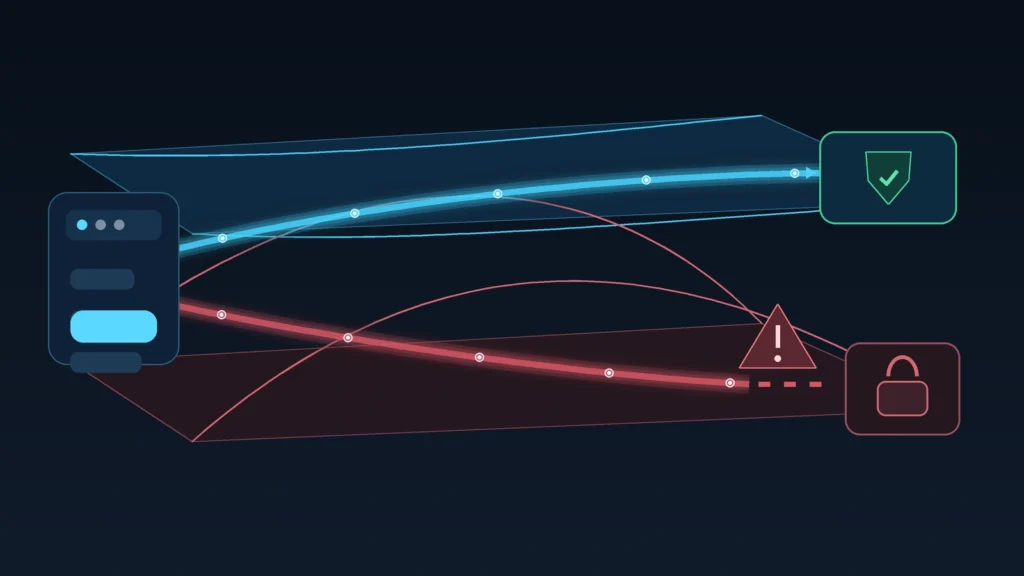
What Should You Do After a Wrong-Network USDT Casino Deposit?
First, do not send another transaction in an attempt to “correct” the first one.
Collect:
● Your casino account ID.
● Amount sent.
● USDT network actually used.
● Network the casino expected.
● Destination address.
● TXID.
● Date and time.
● Screenshot of the cashier instructions.
● Screenshot of the withdrawal/send confirmation.
Then check the TXID on the explorer for the network you actually used.
If it is confirmed, contact the casino through its official support channel and state clearly that the transfer was sent using an unsupported network.
Ask:
Does your payment provider control the destination address on the network I used, and do you offer unsupported-network asset recovery?
Do not give anyone your seed phrase or private key. A legitimate casino does not need control of your personal wallet to investigate a transaction.
Blockchain transactions that have already been confirmed cannot simply be reversed. MetaMask explains that a completed transaction is permanently recorded and a return requires a new transaction by whoever controls the receiving funds.
Do You Need ETH or TRX to Send USDT?
For ordinary self-custody, usually yes in some form.
ERC20 USDT
Ethereum transaction fees are paid in ETH. A wallet that contains ERC20 USDT but no ETH may therefore be unable to send a conventional token transaction until gas is available.
TRC20 USDT
TRON handles fees through Bandwidth and Energy. Staking or delegated resources can cover those requirements; otherwise the network burns TRX when resources are insufficient.
An exchange can hide this complexity by charging you a withdrawal fee and paying the underlying blockchain resource itself.
That is another reason the fee shown by your actual sending platform is more useful than a generic table.
TRC20 or ERC20: Which Should a USDT Casino Player Choose?
Use the following order.
1. Does the Casino Support Only One?
Use that network or do not make the payment.
Compatibility comes before price.
2. Does the Casino Support Both?
Check which networks your wallet or exchange can send.
3. Compare the Actual Fee
Look at the final quote immediately before confirming the transfer.
Do not assume TRC20 is cheaper because of historical articles.
4. Check Where Your USDT Already Is
Moving USDT to a different blockchain solely to save a small payment fee may introduce exchange, bridge or swap costs as well as another opportunity for error.
If your USDT is already on a casino-supported network and the current fee is reasonable, using the existing network can be simpler.
5. Consider Withdrawal Support Too
A casino can support a particular network for deposits without necessarily offering exactly the same withdrawal routes or limits.
Check both sides before you deposit if you expect to withdraw in USDT.
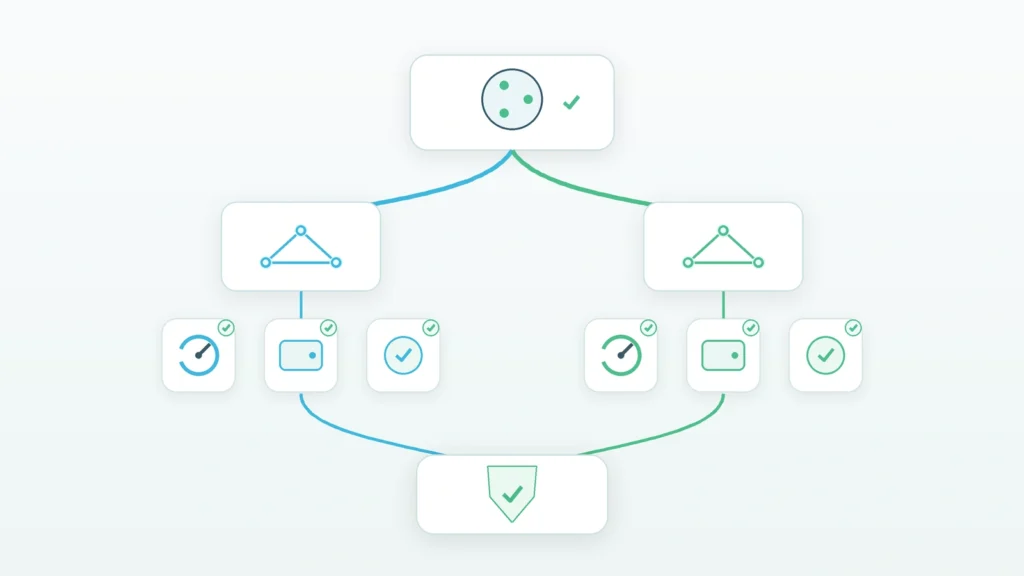
Practical Decision Table
| Situation | Better Approach |
| Casino accepts only TRC20 | Use TRC20 if you decide to deposit |
| Casino accepts only ERC20 | Use ERC20 if you decide to deposit |
| Both are supported | Compare live send fee and wallet compatibility |
| ERC20 gas is currently very low | ERC20 can be the cheaper route |
| You have delegated/staked TRON Energy | TRC20 may be extremely economical |
| Exchange charges a fixed fee | Compare the exchange quote, not raw chain cost |
| USDT already sits on a supported network | Avoid unnecessary bridging unless there is a clear benefit |
| First large casino deposit | Consider a small valid test transfer |
| Casino gives only “USDT” with no network | Do not send until the network is clarified |
| Withdrawal network is unclear | Confirm it before depositing |
USDT Casino Payment Checklist
Before pressing Send, verify five things:
Asset: USDT.
Network: exactly matches the casino cashier.
Address: copied from the official cashier and checked.
Amount: above the casino's minimum deposit.
Fee and final amount: reviewed on the actual wallet or exchange.
For a larger transaction, add a sixth check: make a small valid test transfer first when practical.
Also verify the operator itself before sending money. A valid-looking wallet address does not prove that the casino is legitimate or authorized. The crypto casino licensing guide covers operator, domain, license, withdrawal-policy and network checks.
Bottom Line
TRC20 and ERC20 both provide ways to move USDT, but they are separate payment rails. A casino deposit succeeds safely only when the asset, blockchain and destination instructions match.
The old shortcut that TRC20 is cheap and ERC20 is expensive is no longer reliable enough for a 2026 payment guide. Ethereum mainnet fees can now be measured in cents under low-gas conditions, while an unstaked TRON user can incur several TRX of Energy cost for a USDT transfer. Tomorrow's comparison may be different again.
For casino payments, use this priority:
correct network → correct address → supported amount → live fee → confirmation status.
If the payment goes wrong, save the TXID and contact the receiving operator immediately. Recovery depends largely on whether the destination is self-custodied or controlled by a casino/payment provider and whether that provider supports recovery.
Finally, cryptocurrency changes the payment rail, not the financial risk of gambling. Treat gambling as entertainment, set spending limits in advance and use the site's responsible gambling resources if gambling stops being recreational.
FAQs
Not always.
TRC20 has historically been associated with inexpensive USDT transfers, particularly when the sender has access to staked or delegated TRON Energy. But Ethereum mainnet gas has fallen substantially.
On August 11, 2026, Etherscan was showing a standard ERC20 transfer in the low-cent range (roughly $0.01-$0.02 during final review). A TRON USDT transaction without sufficient Energy can burn several TRX. The cheapest option can therefore change over time and by wallet configuration.
If both networks are supported by the casino, compare the actual fee shown by your wallet or exchange before sending.
You should not.
TRC20 USDT runs through TRON, while ERC20 USDT runs through Ethereum. The sending network must match the network shown by the casino cashier. Tether publishes separate deployments and contract addresses for the two protocols.
If the cashier displays ERC20, send using Ethereum/ERC20. If it displays TRC20, send using TRON/TRC20.
The casino may not credit the deposit.
Whether recovery is possible depends on the network used, destination address, payment-provider architecture and who controls the private keys. With a custodial casino address, you normally cannot recover the funds yourself.
Contact official support with the TXID, destination address, amount and network. Recovery should be treated as uncertain rather than guaranteed.
A confirmed blockchain transaction proves that the network processed the transfer; it does not necessarily prove that the casino credited the correct player account.
Check:
● Destination address.
● USDT network.
● Amount.
● Casino minimum deposit.
● TXID.
● Casino confirmation requirement.
If all match, give the TXID to the casino's official support team.
TRON produces blocks more frequently: roughly every three seconds compared with Ethereum's 12-second slots.
Casino deposit speed still depends on how many confirmations the payment processor requires and how quickly the casino credits the account. Block interval alone does not determine the final cashier time.
Normally, receiving ERC20 USDT does not require you to spend ETH.
However, if the USDT is in a self-custody wallet and you later want to send it elsewhere, an ordinary Ethereum transaction requires ETH for gas.
The same principle applies differently on TRON, where sending TRC20 USDT requires Bandwidth/Energy resources or enough TRX to cover the resource burn.
Yes.
A casino or exchange can establish its own withdrawal fee, minimum or processing policy. The amount charged to the user therefore does not necessarily equal the raw blockchain cost.
For accurate comparison, distinguish between the blockchain network fee, your wallet/exchange withdrawal fee and the casino's own withdrawal charge.
Only if you actually need to change networks and understand the additional transaction.
Do not bridge directly to a casino deposit address unless the casino explicitly says that route is supported. A safer operational approach is generally to complete the network conversion into a wallet or account you control, confirm that the correct USDT is present on the destination network, and then make the casino deposit using the cashier's normal instructions.
Unnecessary bridging adds another transaction, another fee and another opportunity to select the wrong chain.